Website Accessibility Testing Software: how Axessibly Works
Running a website accessibility test is often perceived as a complex and highly technical task, typically associated with specialized audits or compliance experts. Axessibly is designed to make accessibility testing a clear, structured, and operational process.
The platform automatically analyzes web pages, identifying WCAG accessibility issues and technical barriers that may impact usability, user experience, and accessibility compliance. Rather than providing abstract warnings, Axessibly highlights what is not working and where intervention is required.
From Page Scanning to Accessibility Analysis
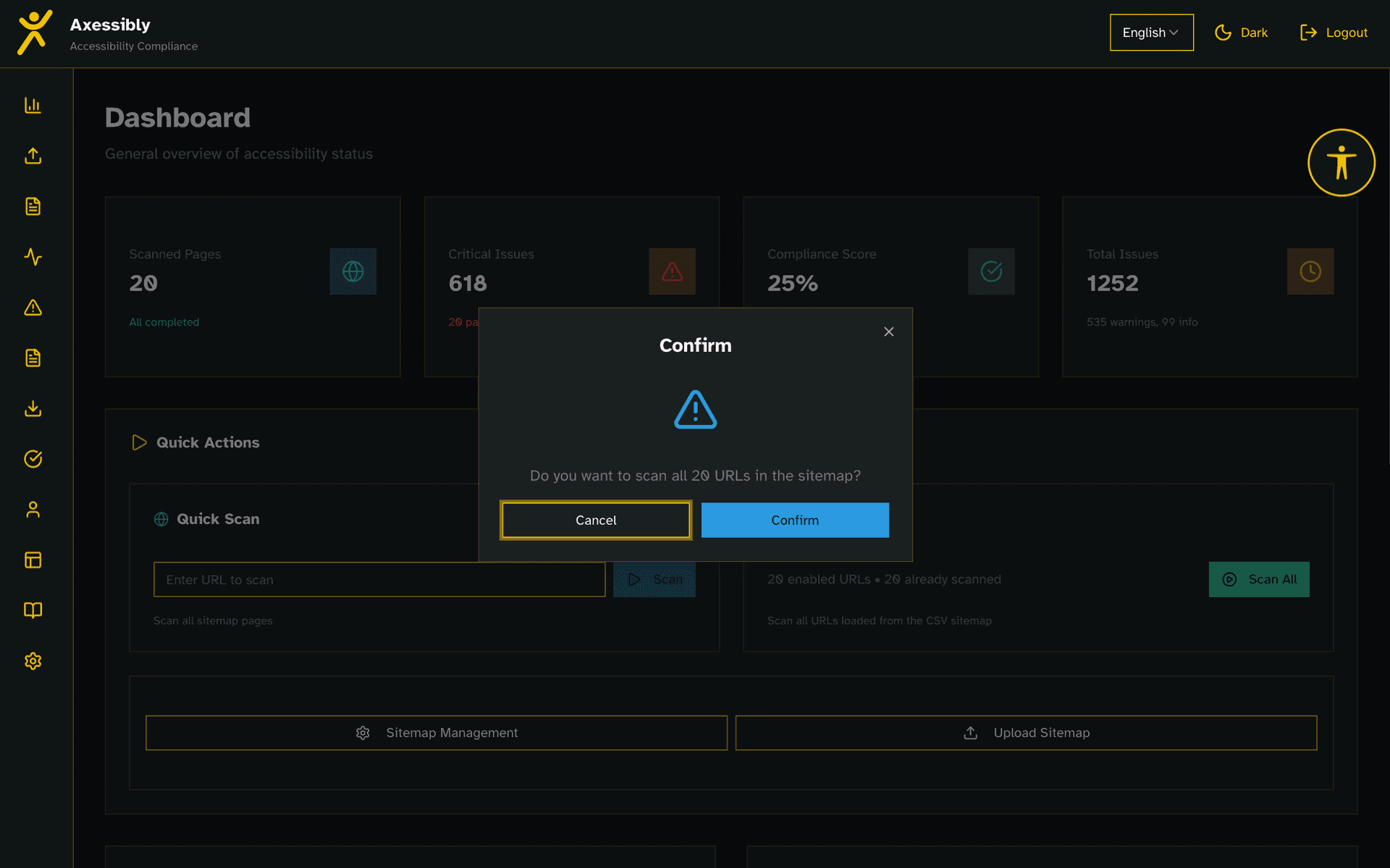
Axessibly operates through automated page scanning.
You can run an accessibility test by analyzing individual URLs or uploading a sitemap, allowing the platform to perform large-scale accessibility checks across multiple pages.
During the scanning process, Axessibly evaluates:
- page structure
- HTML code
- interactive elements
- semantic relationships
How Axessibly Helps You Achieve WCAG Compliance
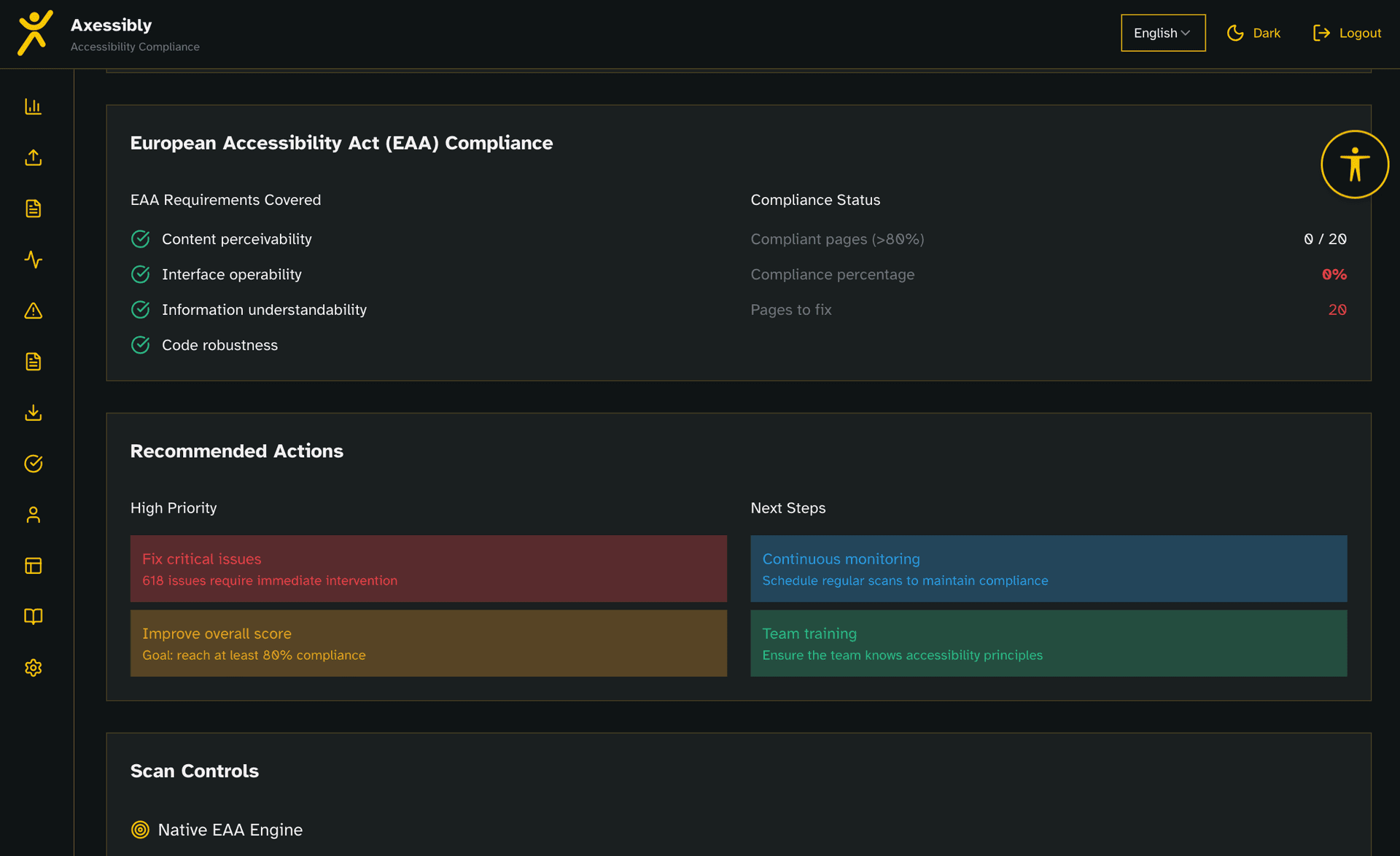
Axessibly performs accessibility testing using a combined verification system. The platform evaluates web pages against WCAG standards while leveraging a dual analysis engine designed to detect a broader spectrum of accessibility issues.
This approach enables the identification of both common accessibility problems and technical errors, reducing legal risks and improving WCAG conformance. The result is a more comprehensive accessibility analysis compared to tools relying on a single scanning engine.
Identifying Actual WCAG Accessibility Issues
One of the most common limitations of traditional accessibility checkers is the gap between issue detection and corrective action.
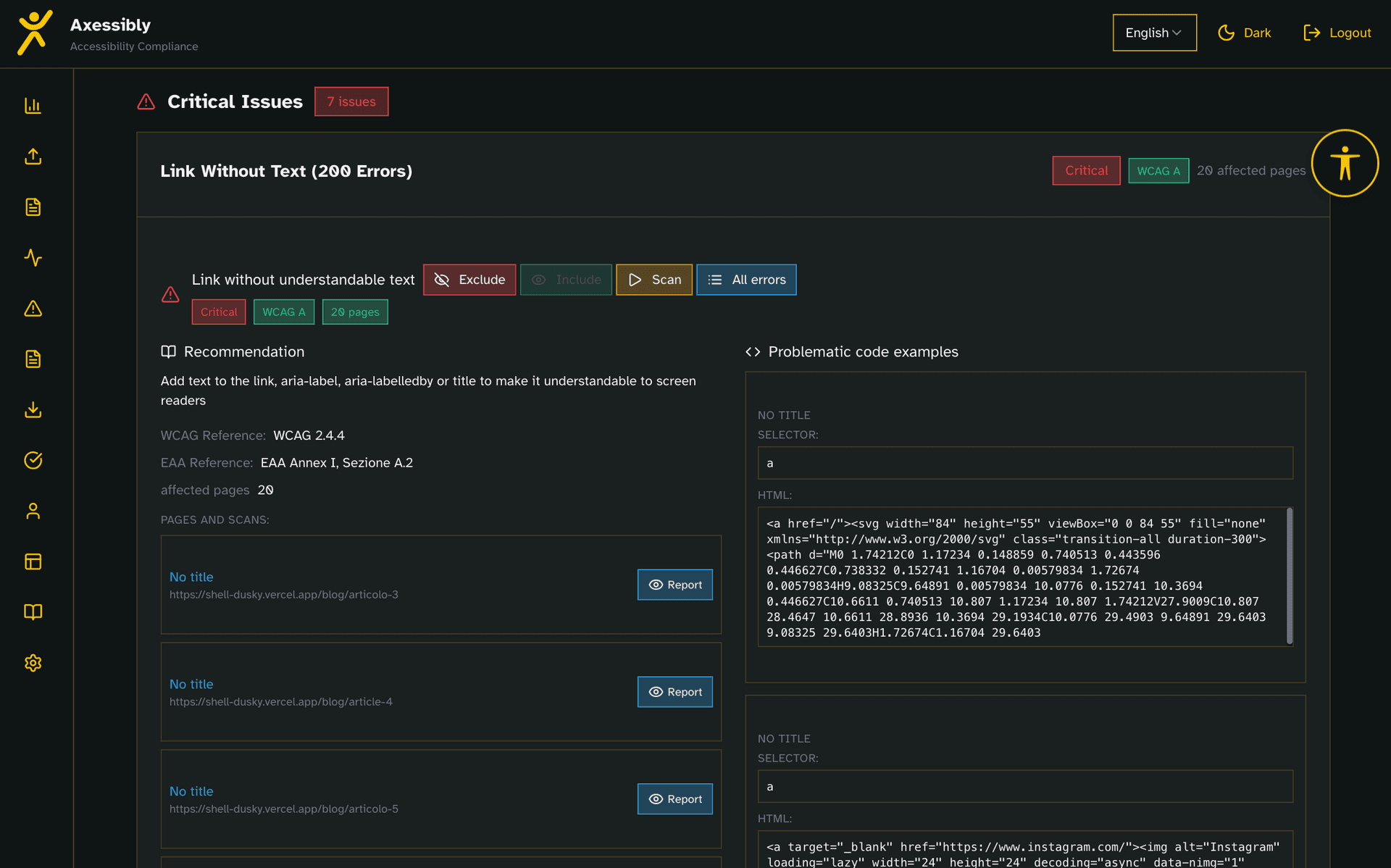
Axessibly reduces this gap by presenting each problem in context. Issues are described using clear language, categorized by severity, and directly connected to the affected HTML elements.
This allows users to quickly understand:
- which accessibility issues are present
- why they represent a WCAG problem
- where corrections should be applied
The output is not simply a list of errors, but actionable technical guidance.
Prioritization and Intelligent Issue Management
Not all accessibility issues have the same impact.
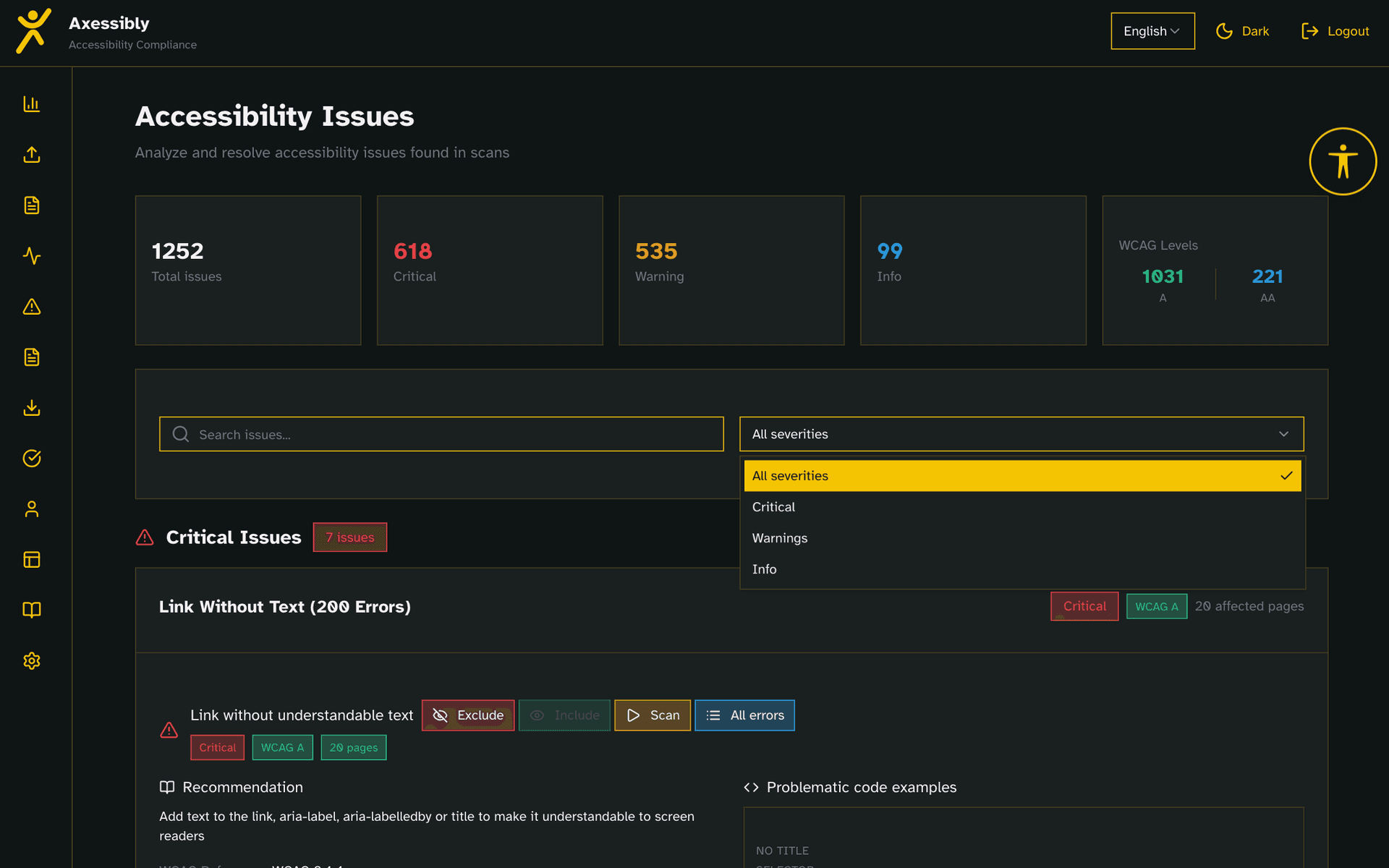
Axessibly organizes detected problems according to severity levels, enabling teams to focus on the most critical barriers first. This prioritization model supports more efficient remediation workflows and reduces time spent on marginal optimizations.
The platform also allows users to filter issues, exclude non-modifiable elements, and target specific categories of accessibility problems. Accessibility testing becomes a manageable operational workflow rather than a static diagnostic report.
A Clear View of Accessibility Status
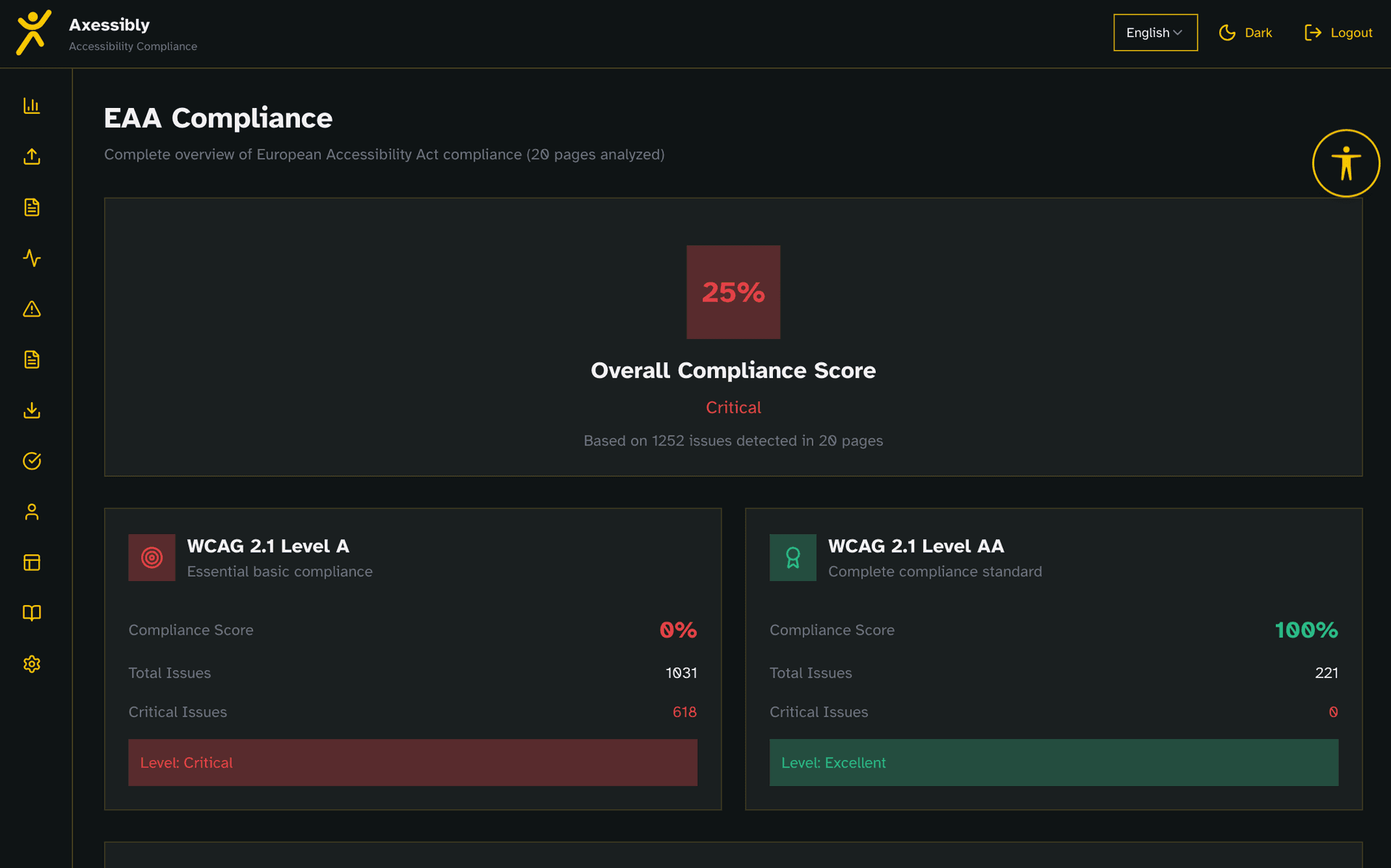
Axessibly's dashboard provides an immediate overview of the project's accessibility condition.
Compliance scores, issue distribution, and page-level statistics help users quickly assess the website's accessibility level and monitor improvements over time.
This makes Axessibly valuable not only as a testing tool, but also as a continuous accessibility management solution.
Reports Designed for Real-World Use
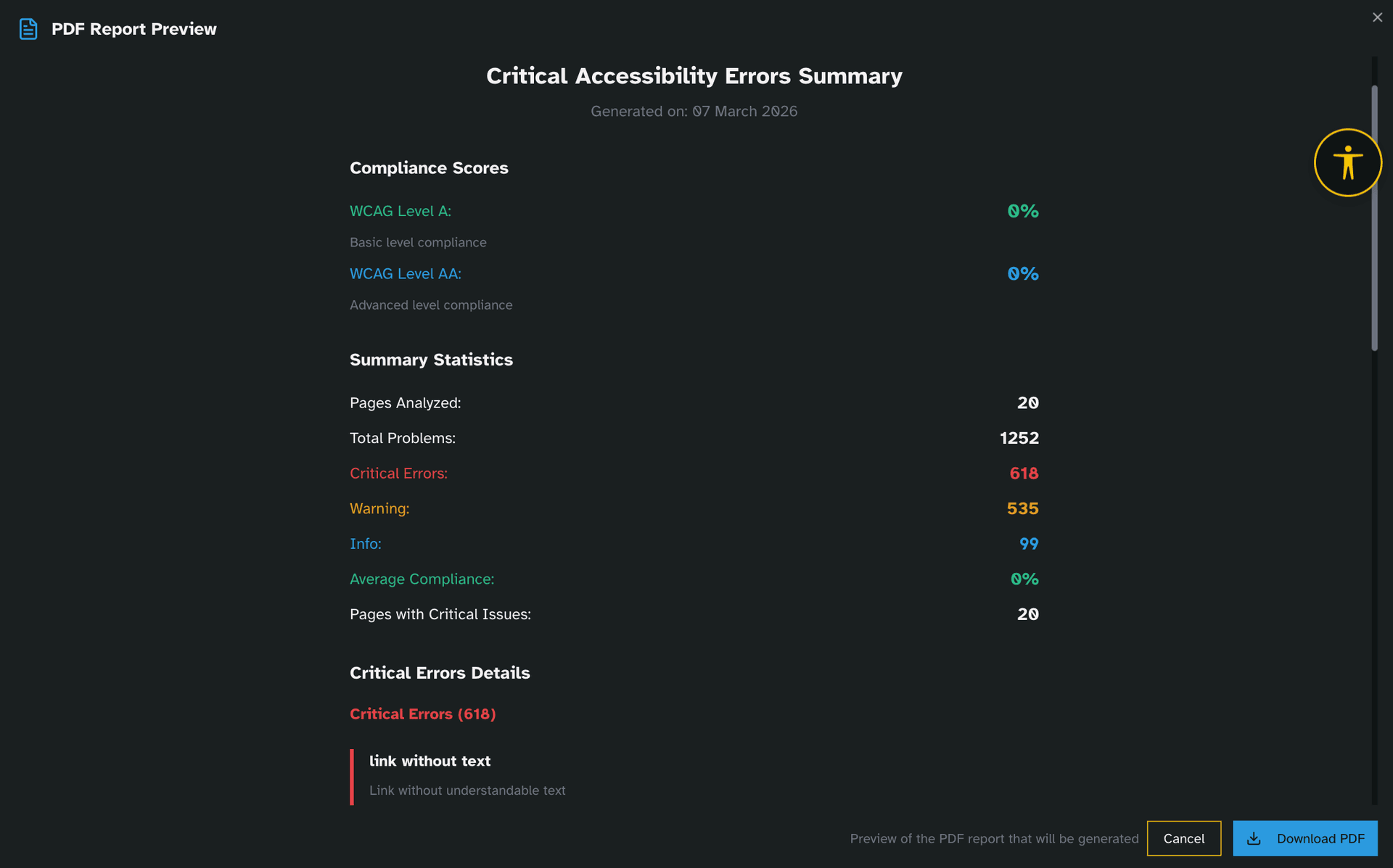
Once the website accessibility test is complete, Axessibly allows the generation of exportable reports. Accessibility data becomes measurable, traceable, and shareable, supporting:
The generated documents can be used for:
- technical documentation
- accessibility audits
- stakeholder communication
- remediation planning
Offline Operation and Data Control
Axessibly runs entirely offline.
Scan data is stored locally, without mandatory cloud dependencies. This model provides greater control over sensitive information and supports environments where data privacy and autonomy are essential.
Making Accessibility Testing Part of Everyday Workflow
Many accessibility tools are used sporadically due to complexity or interpretability challenges.
Axessibly is built around a different principle: simplifying website accessibility testing, clarifying technical issues, and supporting practical remediation processes.
Accessibility is no longer treated as an isolated audit activity, but as a natural component of the website's development and maintenance lifecycle.